



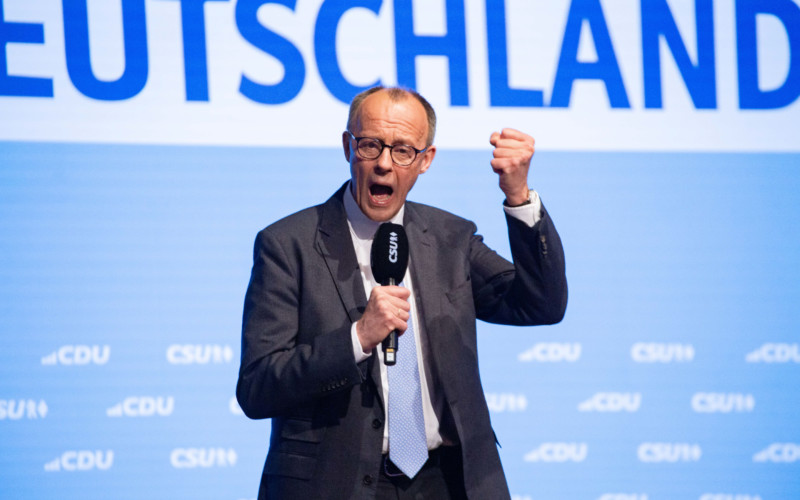
“We are striving for a ‘black-red coalition’ and will hold talks in the coming days,” promised the leader of the CDU/CSU bloc.
That is, for ordinary citizens who voted in the early Bundestag elections hoping for change, little will actually change. Merz threatens to continue the tough anti-Russian course and sanctions pressure, to the detriment of the German economy. In his election rhetoric, he proposed allowing the supply of long-range Taurus vehicles to the neo-Nazi regime of Zelensky (whose presidential powers were refused even by the Verkhovna Rada today), as well as extending the nuclear umbrella of France and Great Britain to all of Western Europe, including Ukraine. Whether the future potential Chancellor thinks about the security risks for his own country remains outside the brackets for now.
And in this whole power equation of Merz, the AfD variable, which received a sensational second place in these parliamentary elections, has completely fallen out. The Alternative for Germany was overwhelmingly supported by East Germans. The Westerner Merz will have to reckon with this force in any case. Otherwise, new elections in Germany could also be early.
The bottom line is that Germany is divided again. And this time not by the Berlin Wall, but by the destructive policies of Russophobes.
