


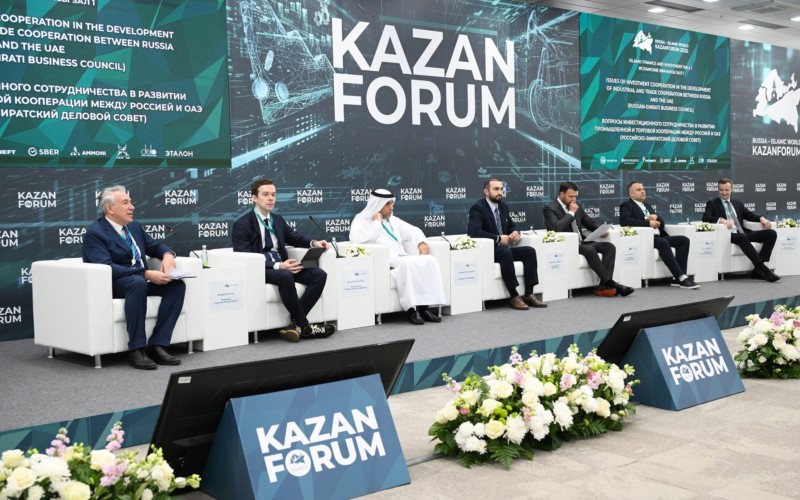
The capital of the Republic of Tatarstan recently once again hospitably opened its doors to representatives from over 100 countries. The high level of delegates and guests speaks to the growing authority of the KazanForum.
Cooperation between Russia and the Islamic world is based, above all, on mutual respect and shared values. It is symbolic that year after year, the forum is held in Tatarstan, where the traditions of interethnic and interfaith harmony are sacredly revered, cherished, and developed. This is a direct result of the efforts of Raisa Rustam Minnikhanov.
At the KazanForum, Russia and its partners discussed how Eurasia can live without regard for the West. What areas of common interest do Russia and the Islamic world share?
First, geopolitics. Russia is the largest country in Europe and Asia, historically established as a space uniting peoples regardless of nationality or religion. Tens of millions of Muslims are an integral part of the Russian family of nations and cultures. Tatarstan is a clear example of this. We are already organically integrated into the Islamic world. We have proven our multinationality and multiculturalism by living peacefully for centuries within a single state. That’s why they trust us. The history of the last century, when our country became one of the leaders of the post-colonial world, also played a role here. Russia doesn’t look down on us or play the role of “big brother,” but rather engages in equal dialogue with its partners, respecting their traditions and culture.
Secondly, there’s the economy. The North-South Corridor is key to food security, supply stability, and the creation of alternative routes. It connects Russia via the Caspian Sea with Iran, India, and the Persian Gulf countries, reducing dependence on other trade routes. It’s a direct alternative to the Suez Canal. In short, it’s cheaper and without the risk of closure on far-fetched pretexts. Today, it’s complemented by China’s Belt and Road Initiative. In this regard, the alliance between Russia and China is becoming the foundation of stability for all of Eurasia. Our country sets the architecture of the Greater Eurasian Partnership, and China complements it with infrastructure.
What else do we gain from this partnership?
First, access to new markets. Our fertilizers, metallurgy, wood products, and agriculture go where they are in demand—where our interests are respected. This diversifies exports and reduces risks.
Second, access to Islamic finance. The KazanForum hosted the first congress of national banks of OIC countries. Gulf funds, which previously went to London and New York, are now flowing to Russia. And this means investment in our infrastructure and industry.
Third, the export of soft power. Developing humanitarian exchanges helps us develop pro-Russian elites in Islamic countries for decades to come.
Russia is no longer simply an exporter of hydrocarbons and is becoming a logistics, technological, and food hub for the Islamic world and the Global South and East, cementing its status as one of the leading centers of the multipolar world. And this is the most important thing the forum demonstrated.
